

What started out as a fantasy trilogy and now spans five books (with a planned total of seven in the series), A Song of Ice and Fire by George R. R. Martin is one of those series that has set a benchmark for the genre. Full of intrigue and strong characterization, it is what we would call a “cracking good read.” It is no surprise, then, that it has spawned multiple spin-offs, from board games to tabletop RPGs.
There is a board game with two expansions, a card game, and even a tabletop RPG for dice-throwing fun. Each of these has its own following. Likewise, there are fans of the series who will likely snap up the computer strategy game called A Game of Thrones – Genesis. We hoped it would deliver everything those fans wanted.
For us, however, it is nothing short of a disappointment.
The game struggles to decide what it wants to be. On one hand, it aims to deliver a strategic experience reminiscent of a board game. On the other, it tries to function as a real-time strategy combat game.
The game begins around your ancestral base, essentially your mansion. From there, you are tasked with conquering the map by securing towns, castles, and resources. In theory, this is the basic formula of most strategy games, and it should work. Unfortunately, the elements are placed so close together that terrain becomes little more than a background detail rather than a meaningful tactical factor.
This is exactly how the game plays out. The map feels cramped, with resource structures, castles, and towns dominating the play area. It feels more like a game board than an expansive, living world.
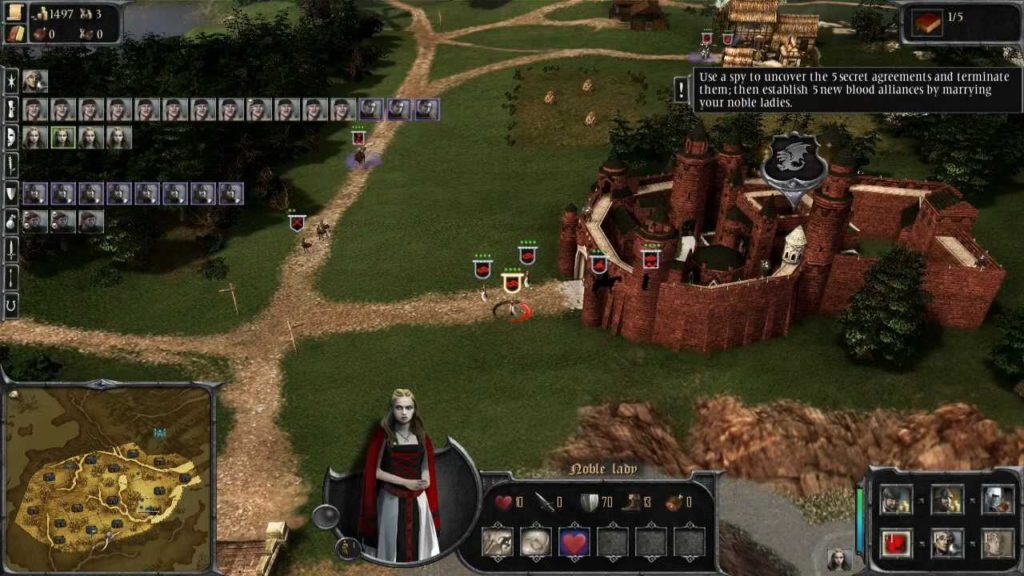
The strategic goal revolves around capturing and holding these resource elements. This can be achieved by sending envoys to persuade them to join your cause, stirring unrest in enemy-held locations, securing alliances through marriage, or assassinating rival nobility if the area is already occupied. You can also create secret pacts, making cities appear loyal to one faction while secretly funding another, meaning you must stay alert to the same tactics being used against you.
This approach may have been intended to stay faithful to the books. It might have worked better if players were not required to move pieces around a cluttered board where it is difficult to identify units, combined with a targeting system that is unforgiving when clicking on pieces inside towns. This aspect feels awkward and frustrating, especially as everything unfolds in real time.
There is also the option of building an army and brute-forcing your way through opposition. In theory, a simplified rock-paper-scissors combat system would already be fairly limited. Sadly, instead of grand battles where tactical brilliance prevails, combat boils down to a numbers game. Luck often outweighs good generalship.

Visually, the game can best be described as utilitarian. The same applies to the user interface, which at times feels like an afterthought. While the tutorial does a reasonable job of explaining the basics, it is hard to follow and feels rushed, as though it was completed to meet a publishing deadline. The grammatical errors in the instructions further reinforce this impression.
The idea of a computer strategy game based on the books is a strong one and deserves far better execution. The concepts of diplomacy and subterfuge as paths to victory are commendable, but in practice they feel fiddly and overly complex within a real-time strategy framework.
Normally, we might recommend a game like this to dedicated fans of the series. In this case, we cannot even do that. It is best avoided.
Leave a Reply